Upscaling & Performance
Intel XeSS Explained: Upscaling, Frame Generation and Low Latency
How Intel XeSS works as of 2026: AI upscaling on XMX and DP4a, quality modes, XeSS 2 frame generation and XeLL, and XeSS 3 multi frame generation.
How Intel XeSS works as of 2026: AI upscaling on XMX and DP4a, quality modes, XeSS 2 frame generation and XeLL, and XeSS 3 multi frame generation.
What path tracing is, how it differs from hybrid ray tracing, why it depends on denoising and upscaling, and the games that brought it to real time.
How Lumen lights Unreal Engine 5 games in real time: bounce light, screen traces, the surface cache, software vs hardware ray tracing and common artifacts.
How Unreal Engine 5's Nanite works: triangle clusters, a hierarchy of detail, streaming, software rasterization of tiny triangles, and its limits.
A practical, step-by-step path for complete beginners: choose an engine, learn the basics, clone classics, finish tiny games, join jams and keep growing.
Follow a game from first idea to launch: concept, pre-production, prototyping, production, alpha, beta, certification, release and post-launch updates.
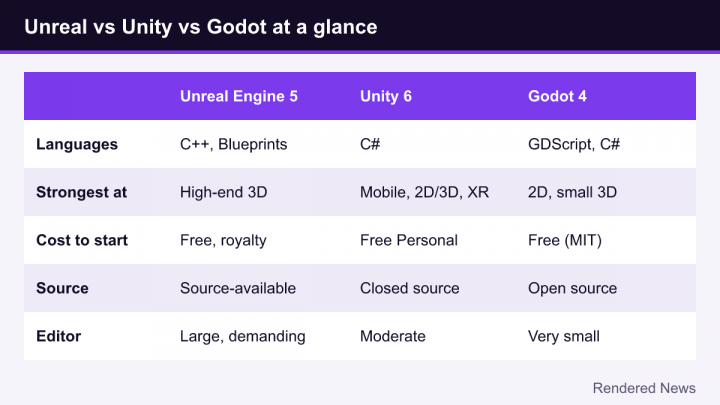
A goals-based comparison of Unreal, Unity and Godot as of 2026: languages, learning curve, 2D vs 3D, licensing, platforms and which to learn first.
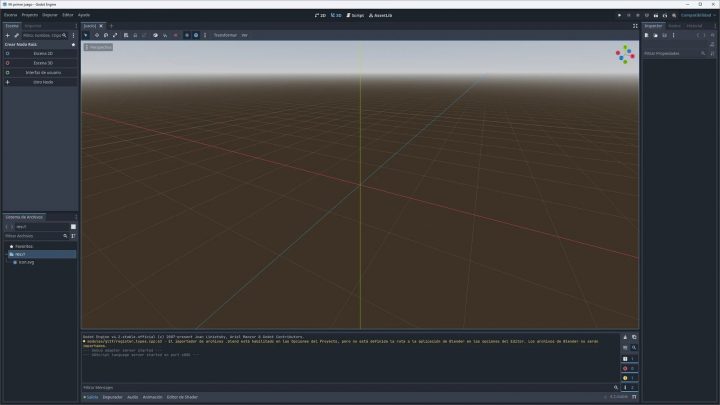
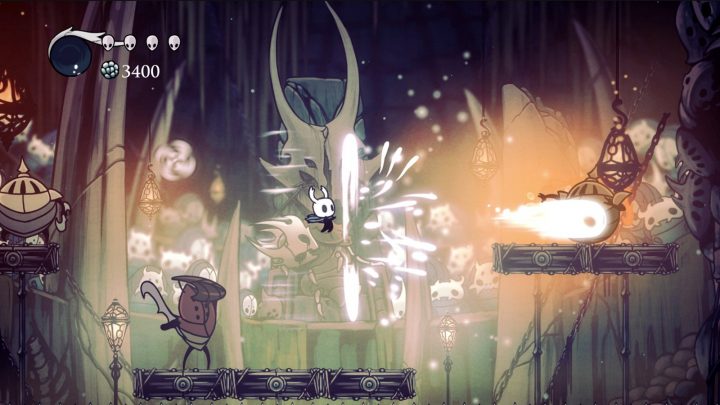
What makes Godot different: the MIT license, scenes and nodes, GDScript and C#, its strong 2D tools, Godot 4's renderers and the games built with it.
How the Unity engine works: the editor, GameObjects and components, C# scripting, URP and HDRP, the Unity 6 release model and the games built with it.
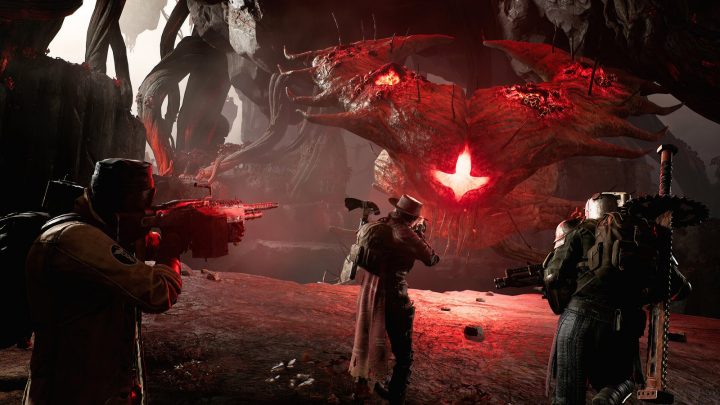
A clear tour of Unreal Engine 5: Nanite, Lumen, World Partition, MetaHuman, PCG, Blueprints and C++, Fab, the version history and the games built on it.