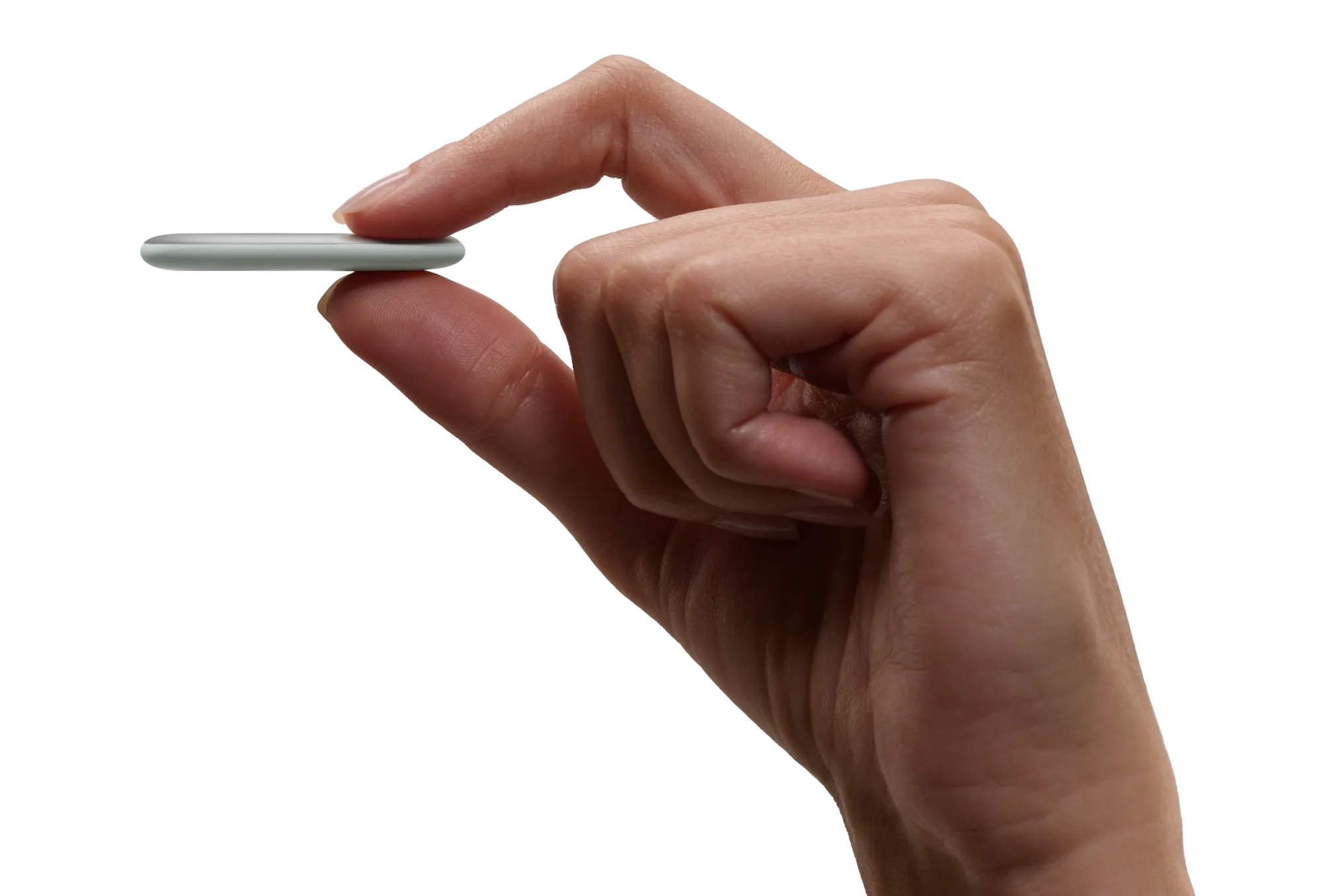
Google has officially entered the competitive item tracker market with the announcement of its new Pixel Tag, a device designed to help users locate lost belongings with precision and ease. The new tracker positions itself as a direct competitor to Apple’s popular AirTag, offering advanced connectivity features including both Bluetooth and Ultra-Wideband (UWB) technology, along with an impressive battery life that promises up to one year of continuous operation. This launch marks a significant expansion of Google’s hardware ecosystem and represents the company’s commitment to providing Android users with premium tracking capabilities.
Advanced UWB Technology Powers Precise Location Tracking
The Pixel Tag’s standout feature is its support for Ultra-Wideband technology, which enables significantly more accurate location tracking compared to Bluetooth-only alternatives. UWB technology uses radio waves to measure the precise distance between devices, allowing users to locate their belongings with centimeter-level accuracy. This is particularly useful in indoor environments where GPS signals are weak or unavailable. When combined with Bluetooth connectivity, the Pixel Tag offers a comprehensive tracking solution that works effectively across various scenarios, from finding keys buried in a couch cushion to locating a bag in a crowded airport terminal.
The technology behind UWB has been gaining traction in the consumer electronics industry over recent years. Originally developed for industrial and military applications, UWB has found its way into smartphones, smartwatches, and now dedicated tracking devices. Apple introduced UWB in its iPhone 11 series back in 2019 and leveraged the technology for AirTags when they launched in 2021. Google’s adoption of UWB in the Pixel Tag signals the technology’s growing importance in the Android ecosystem and suggests broader compatibility with future Android devices.
Battery Life and Design Considerations
One of the most impressive specifications of the Pixel Tag is its claimed battery life of up to one year. This extended operational period means users can attach the tracker to their valuables and largely forget about maintenance for months at a time. The long battery life is achieved through efficient power management and the relatively low energy requirements of Bluetooth Low Energy (BLE) technology. Most competing trackers in the market offer similar battery life claims, with Apple’s AirTag also promising approximately one year of use with a standard CR2032 coin cell battery.
The item tracker market has experienced substantial growth since Apple popularized the category with AirTags. According to industry analysts, the global smart tracker market is expected to reach several billion dollars in value by the mid-2020s, driven by increasing consumer awareness about device tracking and the proliferation of compatible smartphones. Samsung has been competing in this space with its Galaxy SmartTag series, while Tile remains a significant player with its range of Bluetooth trackers. Google’s entry with the Pixel Tag adds another major technology company to the competitive landscape, potentially accelerating innovation and driving down prices for consumers.
Integration with Android Ecosystem and Privacy Features
The Pixel Tag is expected to integrate seamlessly with Google’s Find My Device network, which leverages millions of Android smartphones worldwide to help locate lost items. This crowdsourced approach means that even if a tagged item is far from its owner, nearby Android devices can anonymously relay its location. Google has been expanding its Find My Device capabilities in recent years, and the Pixel Tag represents a natural hardware extension of this service. Privacy and anti-stalking features are also likely to be prioritized, as the industry has faced scrutiny over the potential misuse of tracking devices. Both Apple and Google have implemented measures to alert users when unknown trackers may be traveling with them.
For Android users who have long envied iPhone owners’ access to AirTags with full UWB precision tracking, the Pixel Tag offers a welcome alternative. While third-party trackers have been available for Android devices, Google’s first-party solution promises tighter integration with Pixel phones and potentially other Android devices. As Google continues to expand its hardware lineup alongside its software services, the Pixel Tag represents another step toward creating a cohesive ecosystem that can compete more directly with Apple’s tightly integrated product family.
Expert Opinion: Google’s entry into the tracker market with UWB technology signals the maturation of this product category and will likely accelerate Android ecosystem development for precise location services. As more devices adopt UWB, we can expect cross-platform compatibility improvements and stronger industry-wide privacy standards to address ongoing stalking concerns. The Pixel Tag could become a gateway product that encourages deeper user investment in Google’s hardware ecosystem.