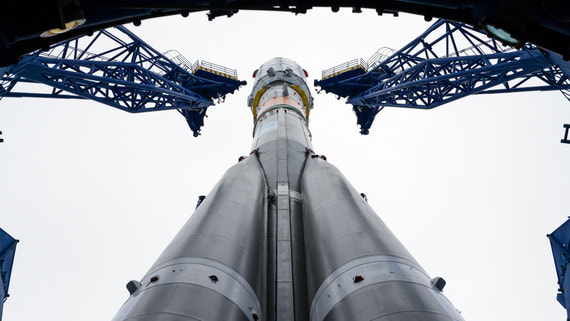
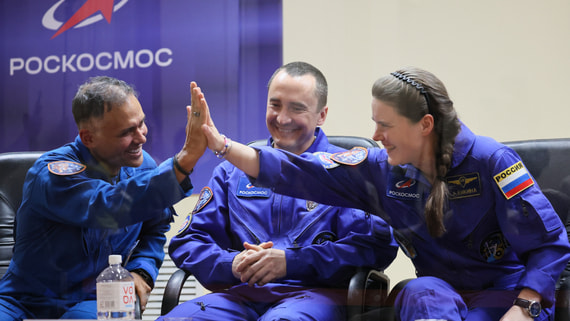
A new crew has embarked on their journey to the International Space Station as the Soyuz MS-29 spacecraft successfully lifted off from the historic Baikonur Cosmodrome in Kazakhstan. The mission marks another chapter in the ongoing international cooperation in space exploration, with cosmonauts preparing for an ambitious program that includes 38 scientific experiments and two scheduled spacewalks during their orbital stay. The launch proceeded smoothly, with the spacecraft entering its planned trajectory toward the orbital laboratory that has been continuously inhabited for over two decades.
Mission Objectives and Scientific Program
The crew aboard Soyuz MS-29 faces a demanding schedule during their time at the International Space Station. The 38 experiments planned for this mission span multiple scientific disciplines, including materials science, biotechnology, Earth observation, and human physiology research. These investigations are designed to advance our understanding of how extended spaceflight affects the human body, while also developing technologies that could benefit both future space missions and life on Earth. Russian space experiments have historically contributed significantly to global scientific knowledge, with research conducted on the ISS leading to breakthroughs in protein crystallization, fluid dynamics, and plant biology in microgravity conditions.
The two extravehicular activities, commonly known as spacewalks, represent some of the most challenging and critical work performed by station crews. These excursions outside the protective confines of the station require extensive preparation and carry inherent risks, but they are essential for maintaining and upgrading the orbital outpost. Russian cosmonauts typically exit through the Poisk module, wearing Orlan spacesuits that have been refined over decades of Soviet and Russian space experience. Each spacewalk can last up to eight hours and demands peak physical conditioning and mental focus from the crew members involved.
The Legacy of Baikonur and Soyuz Program
The Baikonur Cosmodrome, from which this mission launched, holds an unparalleled place in space exploration history. Established in 1955 during the Soviet era, this sprawling facility in the Kazakh steppe witnessed humanity’s first satellite launch with Sputnik in 1957 and Yuri Gagarin’s historic first human spaceflight in 1961. Today, Baikonur remains one of the world’s busiest spaceports, continuing to serve as the primary launch site for crewed Russian missions despite Russia’s efforts to develop the new Vostochny Cosmodrome in the Far East. The facility is leased by Russia from Kazakhstan under an agreement that extends until 2050.
The Soyuz spacecraft itself represents one of the most reliable and long-serving designs in spaceflight history. First launched in 1966, the Soyuz has undergone continuous improvements while maintaining its fundamental three-module design consisting of the orbital module, descent module, and service module. Following the retirement of NASA’s Space Shuttle program in 2011, Soyuz vehicles served as the sole means of transporting crews to the ISS until SpaceX’s Crew Dragon began operational flights in 2020. Despite new commercial alternatives, the Soyuz remains a crucial component of space station operations, valued for its proven track record and emergency rescue capabilities.
International Space Cooperation Amid Global Tensions
The continuation of joint space operations between Russia and Western nations aboard the ISS stands as a notable example of international scientific cooperation persisting despite significant geopolitical tensions on Earth. The space station program, which began in 1998, brings together the space agencies of Russia, the United States, Japan, Canada, and the European Space Agency in a partnership that has survived numerous diplomatic crises. The station’s interdependent design, with Russian modules providing propulsion and American modules supplying much of the electrical power, necessitates ongoing cooperation regardless of terrestrial politics. Both NASA and Roscosmos have indicated their commitment to maintaining ISS operations through at least 2030, though plans for the station’s eventual decommissioning and replacement continue to evolve.
As the Soyuz MS-29 crew settles into their orbital home and begins their scientific work, they join a continuous human presence in space that has persisted since November 2000. Their mission contributes to humanity’s accumulated experience of living and working beyond Earth, knowledge that will prove essential as space agencies and private companies look toward more ambitious goals including lunar bases and eventual crewed missions to Mars.
Expert Opinion: The Soyuz MS-29 mission demonstrates Russia’s continued commitment to maintaining its role in crewed spaceflight despite economic pressures and the emergence of commercial competitors. The planned 38 experiments suggest an intensified focus on maximizing scientific return from each mission, while the two scheduled spacewalks indicate ongoing investment in station maintenance. Looking ahead, the reliability of Soyuz operations will remain crucial for ISS crew safety until new Russian spacecraft like Orel become operational, likely not before the late 2020s.