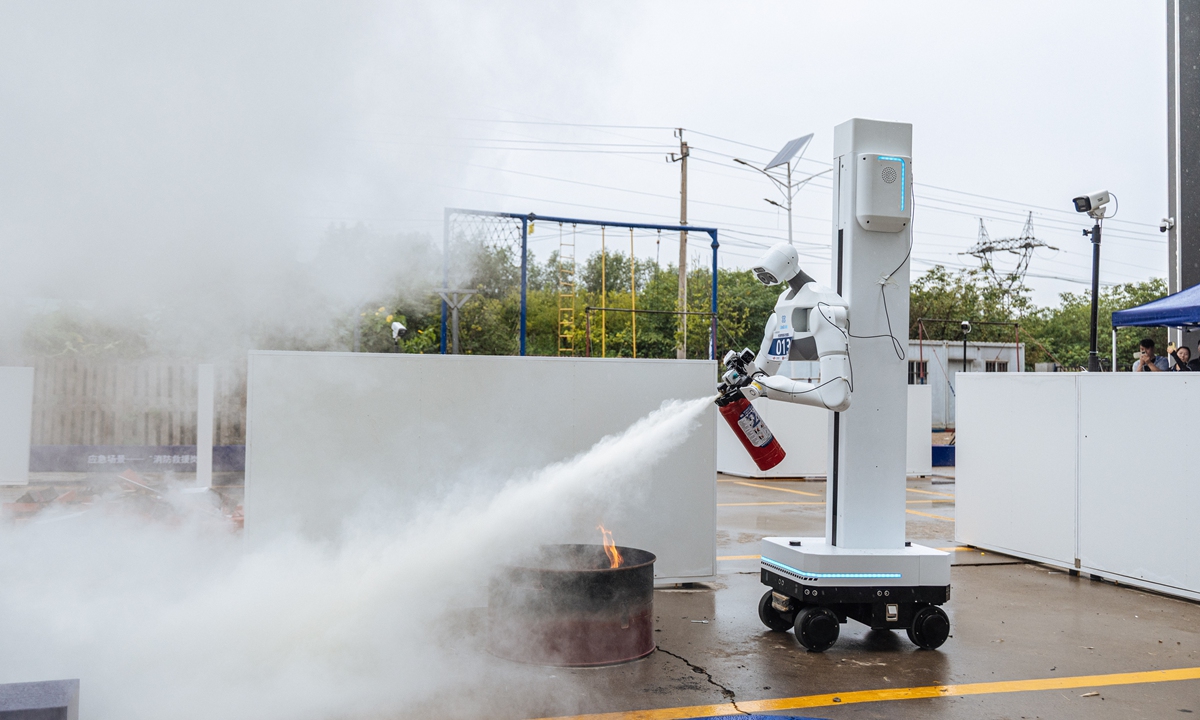
In a remarkable demonstration of how far robotics technology has advanced, humanoid robots were put to the ultimate test at the World Humanoid Robot Games, where they faced the challenge of extinguishing actual fires. The high-stakes competition revealed both the promising potential and current limitations of autonomous firefighting robots, as only three teams managed to successfully complete the demanding trial. This landmark event marks a significant step forward in developing robots capable of performing dangerous tasks that could save human lives.
The Challenge: Robots vs. Real Flames
The firefighting challenge at the World Humanoid Robot Games was designed to simulate real emergency scenarios that first responders face daily. Participating robots were required to navigate complex environments, identify fire sources, and deploy appropriate extinguishing methods — all without human intervention. The competition organizers deliberately created conditions that would test not only the robots’ physical capabilities but also their artificial intelligence systems, decision-making processes, and ability to operate under extreme conditions including heat and smoke. Teams from around the world brought their most advanced humanoid platforms, each representing years of research and development in robotics, AI, and emergency response technology.
The fact that only three teams successfully completed the challenge underscores the immense technical difficulties involved in creating robots capable of firefighting operations. Unlike controlled laboratory environments, real fires present unpredictable variables including rapidly changing conditions, structural hazards, and visibility challenges. Robots must process vast amounts of sensor data in real-time while maintaining stable locomotion and precise manipulation of firefighting equipment. The high failure rate among competitors highlights that while significant progress has been made, considerable work remains before robotic firefighters become commonplace in emergency services.
Why Robotic Firefighters Matter
The development of firefighting robots addresses a critical need in emergency response services worldwide. According to international fire safety statistics, thousands of firefighters are injured or killed annually while battling blazes. In the United States alone, approximately 60 firefighters die in the line of duty each year, with many more suffering from long-term health effects due to smoke inhalation and exposure to toxic chemicals. Robotic systems could be deployed in the most dangerous situations — such as chemical plant fires, nuclear facility incidents, or structurally compromised buildings — where sending human firefighters poses unacceptable risks.
Several countries and private companies have been investing heavily in firefighting robot technology over the past decade. Japan, which faces unique challenges with earthquakes and resulting fires, has been at the forefront of this research. Similarly, the United States, China, and European nations have developed various robotic platforms ranging from wheeled units to fully humanoid systems. The advantage of humanoid robots specifically lies in their ability to navigate environments designed for humans, use standard equipment, and access spaces that wheeled or tracked robots cannot reach. However, achieving reliable bipedal locomotion while carrying heavy firefighting equipment remains one of the greatest engineering challenges in the field.
Looking Ahead: The Future of Emergency Response
The World Humanoid Robot Games serves as both a competitive platform and a crucial benchmark for tracking progress in robotics technology. Industry experts note that competitions like these accelerate innovation by bringing together diverse approaches and fostering collaboration among research teams. The three successful teams have demonstrated that current technology can indeed produce robots capable of basic firefighting operations, though significant improvements in reliability, speed, and autonomy are still needed before widespread deployment becomes feasible. As artificial intelligence continues to advance and hardware becomes more robust, the dream of robotic first responders working alongside human firefighters moves closer to reality, potentially revolutionizing how society responds to emergencies and protecting those who risk their lives to save others.
Expert Opinion: The results from the World Humanoid Robot Games indicate that we are approximately five to ten years away from seeing humanoid firefighting robots deployed in operational settings. The three successful teams have proven the concept viable, but commercial-grade systems will require substantial improvements in battery life, heat resistance, and AI decision-making. Investment in this sector is expected to increase significantly as insurance companies and municipal governments recognize the potential for reducing both casualties and property damage through early robotic intervention.