The Russian Ministry of Industry and Trade has announced a significant investment of 1.4 billion rubles (approximately $15 million) toward the development of specialized equipment for the domestic microelectronics industry. The funding will specifically target the creation of liquid etching installations, which are essential components in the mass production of semiconductor chips. This substantial allocation reflects the government’s strategic push to strengthen Russia’s technological sovereignty and reduce dependence on foreign suppliers in the critical semiconductor sector.
Strategic Importance of Liquid Etching Technology
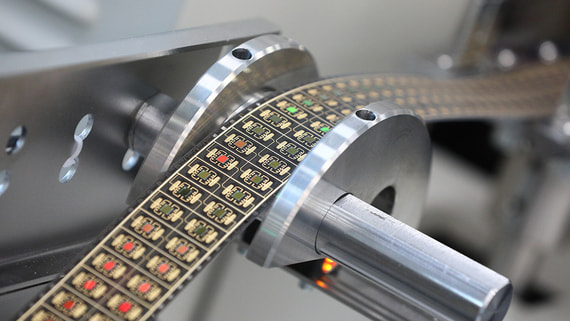
Liquid etching equipment plays a fundamental role in semiconductor manufacturing, serving as one of the critical stages in chip fabrication. The process involves using chemical solutions to selectively remove layers of material from silicon wafers, creating the intricate circuit patterns that form the basis of modern microprocessors. Without reliable domestic production of such equipment, Russian chip manufacturers remain vulnerable to supply chain disruptions and international sanctions that have increasingly targeted the country’s technology sector since 2022.
The technology behind liquid etching has evolved significantly over the past decades, with modern systems capable of achieving nanometer-scale precision. For high-volume chip production, these installations must maintain exceptional consistency across thousands of wafers while minimizing chemical waste and ensuring worker safety. The development of such sophisticated equipment requires expertise in mechanical engineering, chemical processing, and precision control systems—all areas where Russia is now investing heavily to build domestic capabilities.
Context of Russia’s Semiconductor Independence Push
This investment comes amid broader efforts by the Russian government to establish a self-sufficient microelectronics industry. Following the imposition of Western sanctions, Russia has faced significant challenges in accessing advanced semiconductor manufacturing equipment, much of which is produced by companies in the Netherlands, Japan, and the United States. The ASML company from the Netherlands, for instance, dominates the global market for lithography machines, and export restrictions have effectively cut off Russian access to the most advanced chip-making tools.
In response, Russia has accelerated its domestic development programs. The country’s microelectronics strategy, outlined in various government documents, aims to achieve substantial independence in chip production by 2030. Current domestic capabilities remain limited compared to global leaders, with Russian foundries primarily operating at older technology nodes. However, experts note that for many industrial, military, and consumer applications, chips produced at these older nodes remain perfectly adequate, making the investment in supporting equipment like liquid etching systems a practical step forward.
Industry Challenges and Future Outlook
Despite the significant funding allocation, industry analysts point to substantial challenges facing Russia’s semiconductor ambitions. Building a complete domestic supply chain for chip manufacturing requires not just individual pieces of equipment but an entire ecosystem of specialized suppliers, trained personnel, and research institutions. The global semiconductor industry represents decades of accumulated expertise and trillions of dollars in cumulative investment, making rapid catch-up a formidable task.
Nevertheless, the Russian government appears committed to long-term development in this sector. The Ministry of Industry and Trade has indicated that this investment is part of a broader program that will see continued funding for various aspects of microelectronics production. Russian companies such as Mikron and Angstrem have been designated as key participants in these national technology programs, though they continue to face technical and financial hurdles in scaling up production capabilities. The 1.4 billion ruble allocation for liquid etching equipment represents one piece of this larger puzzle, addressing a specific bottleneck in the domestic manufacturing chain while laying groundwork for expanded chip production capacity in the coming years.
Expert Opinion: While Russia’s investment in microelectronics equipment demonstrates serious intent to develop domestic semiconductor capabilities, achieving meaningful technological sovereignty will require sustained funding over a decade or more. The focus on liquid etching systems suggests a pragmatic approach—targeting achievable goals in mature technology nodes rather than competing directly with cutting-edge global foundries. Success will ultimately depend on Russia’s ability to retain and develop technical talent while building the broader industrial ecosystem necessary for advanced manufacturing.