Fifty years ago, a remarkable milestone in space exploration was achieved when NASA’s Viking 1 lander successfully touched down on the surface of Mars, becoming the first spacecraft to operate on the Red Planet and transmit detailed photographs back to Earth. This historic event, which occurred on July 20, 1976, marked the beginning of humanity’s direct exploration of our neighboring world and set the stage for decades of scientific discovery and ambitious plans for future human settlement.
The Viking program represented an unprecedented leap in planetary exploration technology. Viking 1, along with its twin Viking 2 which landed two months later, carried sophisticated instruments designed to search for signs of life, analyze Martian soil, and study the planet’s atmosphere. The landers transmitted over 4,500 photographs of the Martian surface, revealing a barren, rust-colored landscape scattered with rocks and fine dust. These images captured the imagination of millions around the world and fundamentally changed our understanding of what Mars actually looked like up close.
Early Dreams and Scientific Foundations
Long before spacecraft ventured toward Mars, the Red Planet held a special place in human imagination and scientific inquiry. In 1877, Italian astronomer Giovanni Schiaparelli observed what he called “canali” on the Martian surface through his telescope. This term, which simply meant “channels” in Italian, was mistranslated as “canals” in English, sparking decades of speculation about intelligent life constructing vast irrigation systems. American astronomer Percival Lowell became particularly obsessed with this theory, building an entire observatory in Arizona dedicated to studying Mars and publishing books about Martian civilization. While these theories were eventually debunked, they fueled public fascination with the planet for generations.
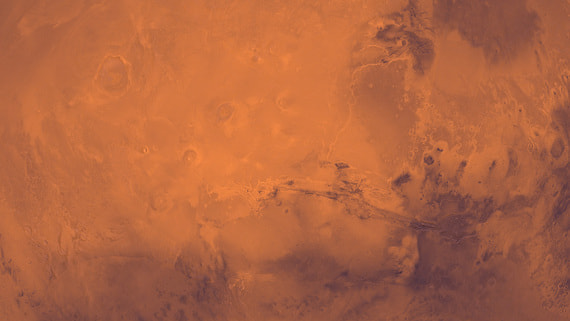
The Space Age brought new opportunities for exploration. In 1965, NASA’s Mariner 4 became the first spacecraft to successfully fly past Mars, returning 22 grainy images that showed a cratered, Moon-like surface with no evidence of canals or vegetation. Subsequent Mariner missions in 1969 and 1971 provided increasingly detailed views, with Mariner 9 becoming the first spacecraft to orbit another planet. These missions revealed enormous volcanoes, vast canyon systems, and dried riverbeds suggesting that water once flowed on the Martian surface billions of years ago.
The Viking Legacy and Modern Rovers
The Viking landers operated far beyond their planned 90-day missions, with Viking 1 continuing to transmit data until 1982. Their biology experiments produced intriguing but ambiguous results regarding the possibility of microbial life. While most scientists concluded that chemical reactions in the Martian soil, rather than living organisms, explained the findings, the question of life on Mars remains open to this day. The Viking program cost approximately $1 billion at the time, equivalent to roughly $5 billion today, making it one of the most expensive planetary missions ever undertaken.
Following Viking, there was a lengthy gap in Mars surface exploration. NASA’s Mars Pathfinder mission in 1997 successfully deployed the small Sojourner rover, demonstrating that mobile exploration was possible. This paved the way for the remarkably successful Spirit and Opportunity rovers, which landed in 2004. Opportunity exceeded all expectations, operating for nearly 15 years and traveling over 45 kilometers across the Martian surface. Currently, NASA’s Curiosity rover, which landed in 2012, and Perseverance, which arrived in 2021, continue to explore the planet. Perseverance carries the Ingenuity helicopter, which has demonstrated powered flight in the thin Martian atmosphere, and is collecting rock samples for eventual return to Earth.
The Race Toward Human Settlement
Today, Mars exploration has entered an exciting new phase as both government agencies and private companies develop plans for human missions. NASA’s Artemis program aims to return humans to the Moon as a stepping stone for eventual Mars exploration, with human landings on Mars potentially occurring in the late 2030s or 2040s. SpaceX, founded by Elon Musk, has been developing the massive Starship rocket with the explicit goal of transporting humans to Mars and establishing a permanent settlement. Musk has stated his ambition to create a self-sustaining city on Mars within this century, though many experts consider such timelines overly optimistic.
The challenges of sending humans to Mars are immense. The journey takes approximately seven months each way, during which astronauts would be exposed to harmful cosmic radiation and the physical effects of microgravity. Communication delays of up to 24 minutes mean crews cannot rely on real-time guidance from Earth. Once on Mars, explorers would face temperatures averaging minus 60 degrees Celsius, a thin atmosphere composed mostly of carbon dioxide, and intense dust storms that can engulf the entire planet. Despite these obstacles, the discovery of water ice at the Martian poles and evidence of subsurface ice deposits offers hope that future colonists could extract water for drinking, agriculture, and rocket fuel production.
As we mark the 50th anniversary of Viking 1’s historic landing, the dream of humans walking on Mars feels closer than ever before. What began with a single spacecraft transmitting photographs from an alien world has evolved into a global effort involving dozens of missions and billions of dollars in investment. The Red Planet that once seemed impossibly distant now beckons as humanity’s next frontier, carrying forward the spirit of exploration that first drove us to look upward at the night sky and wonder what lies beyond.
Expert Opinion: The next decade will likely prove decisive for Mars exploration, as both NASA and SpaceX face critical testing phases for their Mars-capable vehicles. While the technical challenges remain formidable, the convergence of government programs, private investment, and advancing technology suggests that the first human footprints on Martian soil could realistically occur within the next 15-20 years, transforming humanity into a truly multi-planetary species.