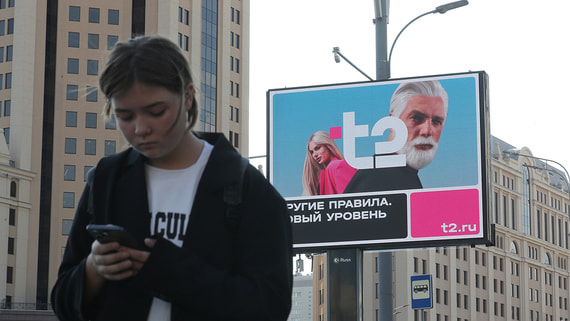
Russian telecommunications operator T2 (formerly Tele2) has initiated legal proceedings against competitor Beeline over the unauthorized use of the ‘Mix’ trademark. The dispute centers on Beeline’s multi-subscription service that allegedly infringes on T2’s registered intellectual property rights. According to industry sources, the defendant could face substantial financial penalties, potentially amounting to double the revenue generated from the contested subscription service.
The lawsuit represents a significant escalation in the competitive landscape of Russia’s telecommunications sector, where major players frequently clash over branding, market share, and customer acquisition strategies. T2’s legal team argues that Beeline’s use of the ‘Mix’ name creates consumer confusion and dilutes the value of their established trademark.
Background of the Trademark Dispute
The ‘Mix’ brand has been a cornerstone of T2’s product lineup for several years, encompassing various bundled services and subscription packages designed to offer customers flexible telecommunications options. T2 registered the trademark through proper legal channels and has invested considerable resources in building brand recognition among Russian consumers. The company views Beeline’s alleged appropriation of the name as a direct threat to their intellectual property investment.
Beeline, one of Russia’s largest mobile network operators owned by VEON Ltd, launched its multi-subscription service under a similar naming convention, prompting T2’s legal action. Multi-subscription services have become increasingly popular in the Russian market, allowing consumers to bundle various digital services including streaming platforms, music services, and cloud storage under a single payment plan. The market for such bundled offerings has grown substantially as telecommunications companies seek to diversify revenue streams beyond traditional voice and data services.
Potential Financial Consequences
The financial stakes in this lawsuit are considerable. Under Russian intellectual property law, trademark infringement can result in penalties calculated as a multiple of the revenue derived from the infringing product or service. In this case, T2 is seeking damages equivalent to twice the revenue Beeline has generated from its contested multi-subscription offering. While exact figures have not been disclosed publicly, industry analysts estimate that multi-subscription services can generate substantial monthly recurring revenue for major operators.
Russian courts have historically taken trademark protection seriously, particularly in cases involving major corporations with clearly established intellectual property rights. Previous rulings in similar cases have resulted in significant financial penalties and mandatory rebranding requirements for defendants found guilty of infringement. The outcome of this case could set important precedents for how telecommunications companies approach product naming and branding strategies in the future.
Implications for the Russian Telecom Industry
This legal battle highlights the intensifying competition in Russia’s telecommunications market, where operators are increasingly fighting not just for customers but also for brand differentiation. The Russian telecom sector has undergone significant consolidation and restructuring in recent years, with companies seeking to establish distinct market positions through unique product offerings and recognizable branding. T2’s rebranding from Tele2 was itself part of a broader strategic repositioning effort designed to refresh the company’s image and appeal to new customer segments.
Industry observers note that trademark disputes of this nature often serve as proxies for larger competitive struggles between telecommunications giants. Beyond the immediate financial implications, winning or losing such cases can significantly impact consumer perception and brand value. For T2, a favorable ruling would reinforce their intellectual property portfolio and potentially deter future infringement attempts by competitors. For Beeline, an adverse decision could necessitate costly rebranding efforts and damage their reputation in the market.
Expert Opinion: This trademark dispute signals a maturing Russian telecommunications market where intellectual property has become a critical competitive asset. We expect to see more such legal battles as operators increasingly rely on distinctive branding to differentiate bundled service offerings in a saturated market. The court’s ruling will likely influence how aggressively telecom companies pursue trademark protection and could reshape product naming strategies across the industry for years to come.